When his face appeared on the screen, older and thinner but unmistakably his, I said nothing.
He cried first.
Thomas told me the helicopter crash had been sabotage. He had discovered money moving out of the Vale Meridian employee pension fund through shell companies tied to Malcolm's private partners. Before he could take the records to the board, he was warned that I had been followed home from school. Julian's father, Robert Vale, helped him copy the evidence and contact federal investigators. On the way to a meeting, Thomas's chartered helicopter went down after a mechanical failure investigators initially blamed on maintenance.
Thomas survived because the aircraft hit timber before the ravine. Robert arranged for him to be moved under federal protection while the investigation expanded.
"Why didn't you call me later?" I asked.
There was no answer that could make seventeen years disappear.
Thomas did not try to invent one.
"At first, I was told contact could expose you," he said. "Later, when the case stalled, I was afraid. I kept telling myself silence was protection. Some of it was. Some of it was cowardice."
I hated him a little for saying the honest thing, because honesty made it harder to hate him completely.
"You don't get to come back as my father because you signed a document," I said.
"I know."
"And you don't meet my children until I decide."
"I know."
That was where we began.
Three days later, I married Julian Vale at the county clerk's office.
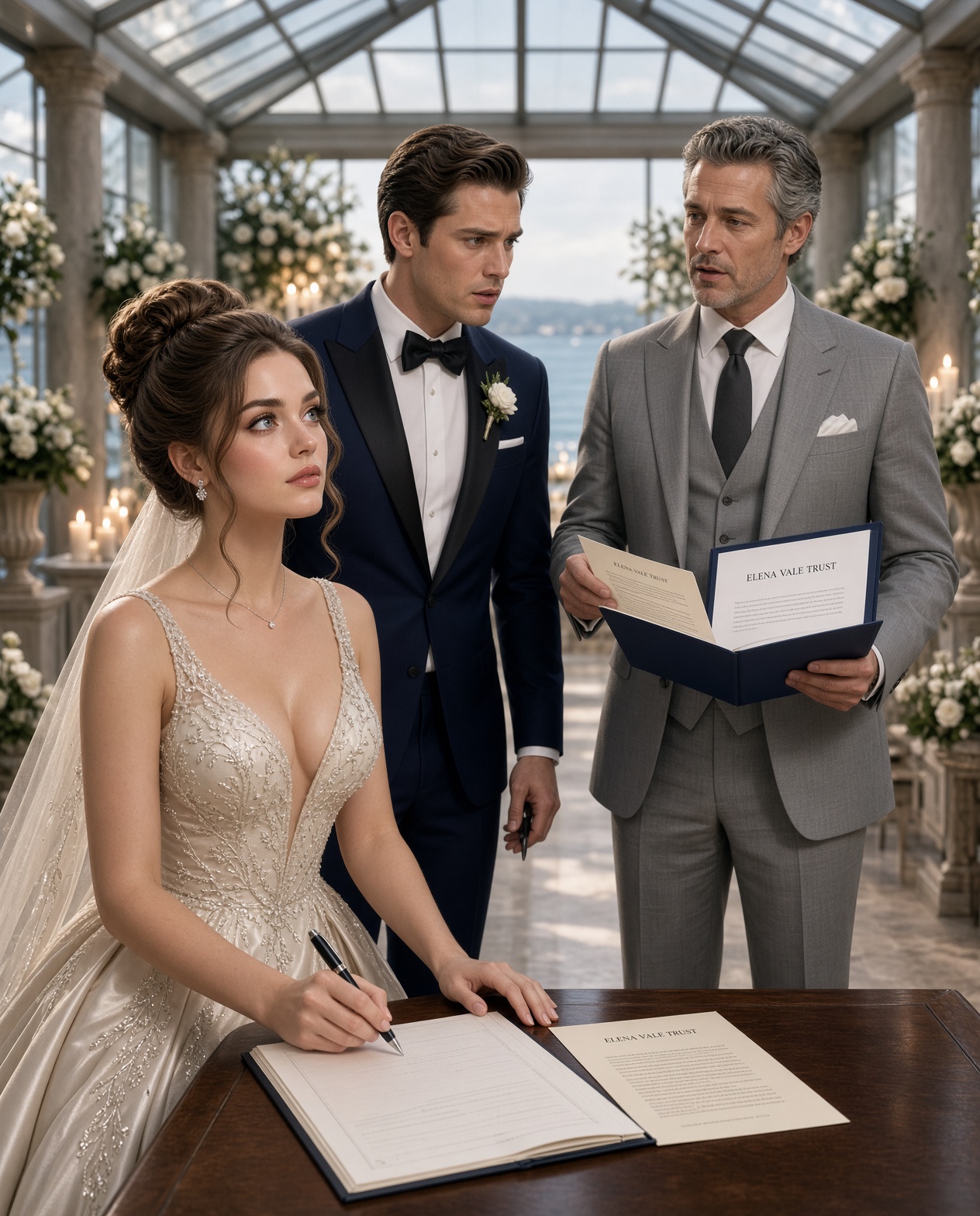
There were no flowers, no orchestra, no photographers. Owen wore the only button-down shirt that had survived our trip without a stain. Maisie carried a paper cup of apple juice. Dana stood on my side. Evelyn stood on Julian's. I signed my own name, kept my own surname, and made Julian repeat in front of both lawyers that the marriage did not give him control of my shares.
"It does not," he said.
"Say the rest."
He knew what I meant.
"Claire votes however Claire chooses."
Only then did I sign.
Malcolm's lawyers filed an emergency petition the next morning challenging the validity of Thomas's trust amendment and requesting a freeze on the Holloway shares. Dana had expected it. The judge granted a temporary hold on transferring the shares but did not prevent me from participating in the upcoming shareholder verification process. More important, the marriage meant Julian's grandmother's voting trust did not shift to Malcolm on Julian's forty-third birthday.
Malcolm had lost the shortcut he had counted on.
He had not lost the war.
At the next Vale Meridian board meeting, Malcolm arrived with two law firms and a public-relations team. I arrived with Dana, Julian, Evelyn, and a binder containing certified records I had spent three nights reading.
Malcolm barely looked at me.
"This is a family governance matter," he said.
"My father's pension records say otherwise," I answered.
That got his attention.
Evelyn formally requested a special committee of independent directors to investigate the historic pension transfers and the circumstances around Thomas's disappearance. Julian recused himself from the committee vote because of his direct conflict. I could not vote the frozen shares yet, but the evidence was serious enough that three independent directors supported the investigation.
Then federal subpoenas arrived.
Not movie-style agents storming the boardroom. Not handcuffs at the table. Just documents served through counsel, followed by the kind of silence powerful people make when they understand the rules have changed.
Within a month, Malcolm stepped aside as chairman pending the special committee's findings. Six months later, federal prosecutors unsealed charges involving wire fraud, obstruction, and conspiracy tied to the pension scheme. The helicopter sabotage was investigated separately. Malcolm denied ordering it, and I learned to stop expecting one dramatic document to answer every question at once.
The company restored money to the pension fund through a court-supervised settlement while the criminal case moved forward. Several former executives cooperated. Malcolm was eventually convicted on fraud and obstruction counts. The sabotage case remained narrower and more complicated, but one contractor pleaded guilty to tampering with aircraft maintenance records.
For me, the boardroom victories were almost easier than the family ones.
Thomas returned to Wyoming under a protection plan after prosecutors determined the immediate risk had fallen. The first time he met Owen and Maisie, he brought no gifts. I had told him not to buy forgiveness.
He sat on the floor and let Maisie show him a book about horses. Owen asked why he had been gone so long.
Thomas looked at me before answering.
"Because I was scared and because I made choices I wish I could change," he said. "Your mom gets to decide how much more I tell you."
It was not perfect. It was enough for a first meeting.
My marriage to Julian was equally slow.
For the first month, we lived in separate wings of the same house because the press camped outside and it was safer for the children to stay behind one security perimeter. We argued about everything from lawyers to cereal. He learned that Maisie hated peas and that Owen slept better if the hallway light stayed on. I learned Julian took insomnia walks at two in the morning and hated the portraits of his ancestors because he thought they looked like men waiting to disapprove of him.
He never entered my room without knocking.
He never asked me how I would vote.
When I took a paid position with a nonprofit that helped hospitality workers recover stolen retirement benefits, he offered funding once. I said no. He never offered again.
Months passed.
The strange contract that had begun on a highway became ordinary in ways I had not expected. School lunches. Parent conferences. Arguments over whose turn it was to take Owen to soccer. Thomas coming for short visits, then longer ones. Evelyn pretending she did not enjoy being called Grandma Price by Maisie.
The one-year anniversary arrived almost quietly.
Julian placed a folder on the kitchen table after the children went to bed.
Inside were the termination papers Dana had prepared months earlier. No penalty. No hidden extension. No claim on my shares. Exactly what he had promised.
"The job is finished," he said.
I looked at the papers, then at him.
A year earlier, I had been standing beside a highway asking a stranger for work because I could not feed my children. I had thought survival meant finding someone willing to pay me for labor.
I had learned something harder: survival also meant refusing to let desperation make decisions for me.
"Good," I said.
Julian's expression fell, just a little.
I pushed the folder back across the table.
"Now ask me without a contract."
For once, Julian Vale had no prepared speech.
He came around the table slowly and stopped before touching me.
"Claire Holloway," he said, "when neither of us needs this anymore, will you still marry me?"
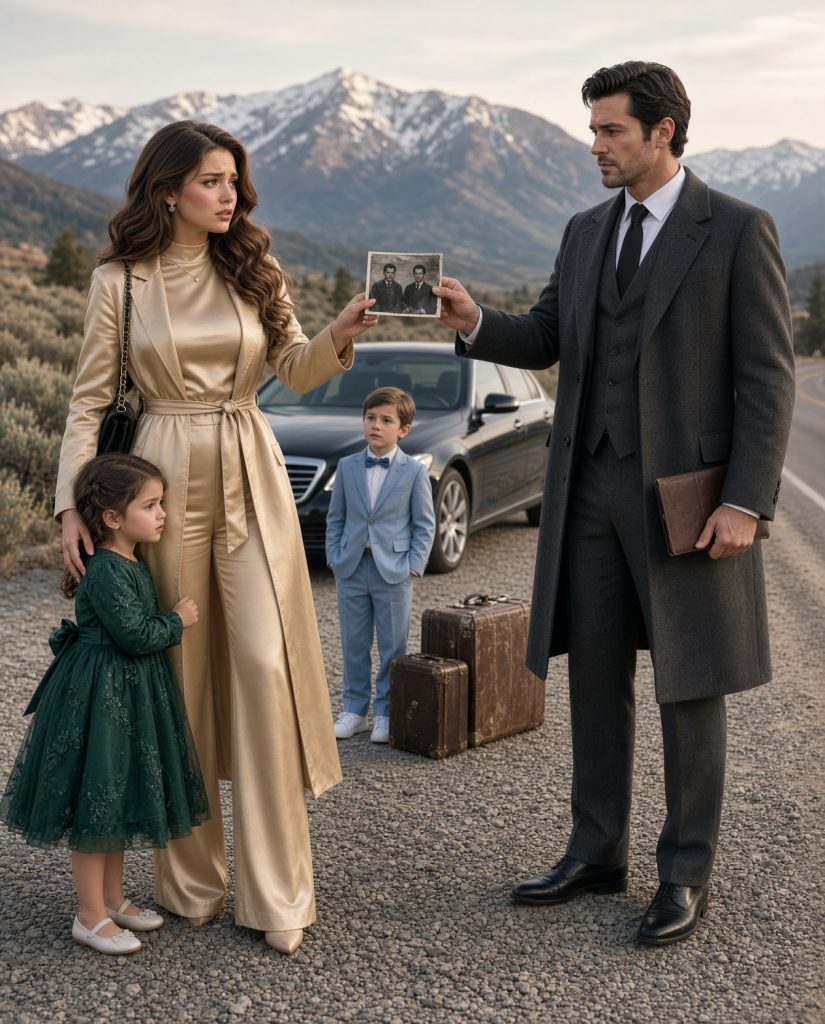
I thought about the empty highway. The black sedan. The impossible photograph. My father's face on a screen. The children asleep upstairs in rooms no contract could take away from them.
Then I smiled.
"This time," I said, "you can call it a proposal."