That restraint unsettled me more than pressure would have.
Cruel men were easy to categorize. A man who had planned to marry me for leverage and then refused to use me once the leverage vanished was more complicated.
For the first two weeks, we lived like courteous strangers in adjoining countries. I stayed in the west suite. Lucian kept the east wing. He always knocked before entering a room I was using, listened when I challenged him, and never treated silence as permission.
He was not suddenly gentle. He remained hard, intimidating, and accustomed to obedience. But he began changing the ways he treated me. When I criticized a damaged eighteenth-century painting in the west corridor, he asked me to choose the conservator and approve the work. It was the first time either family had treated my expertise as more than a hobby.
Meanwhile, my father's retaliation became real. Vale Shipping terminated two access agreements. Lucian's legitimate freight company absorbed penalties and moved operations to more expensive terminals. Men around him argued that I could end the problem with one signature.
He never asked me for it.
That was when respect became dangerous.
I had spent my whole life preparing to defend myself against control. I had no practice defending myself against patience.
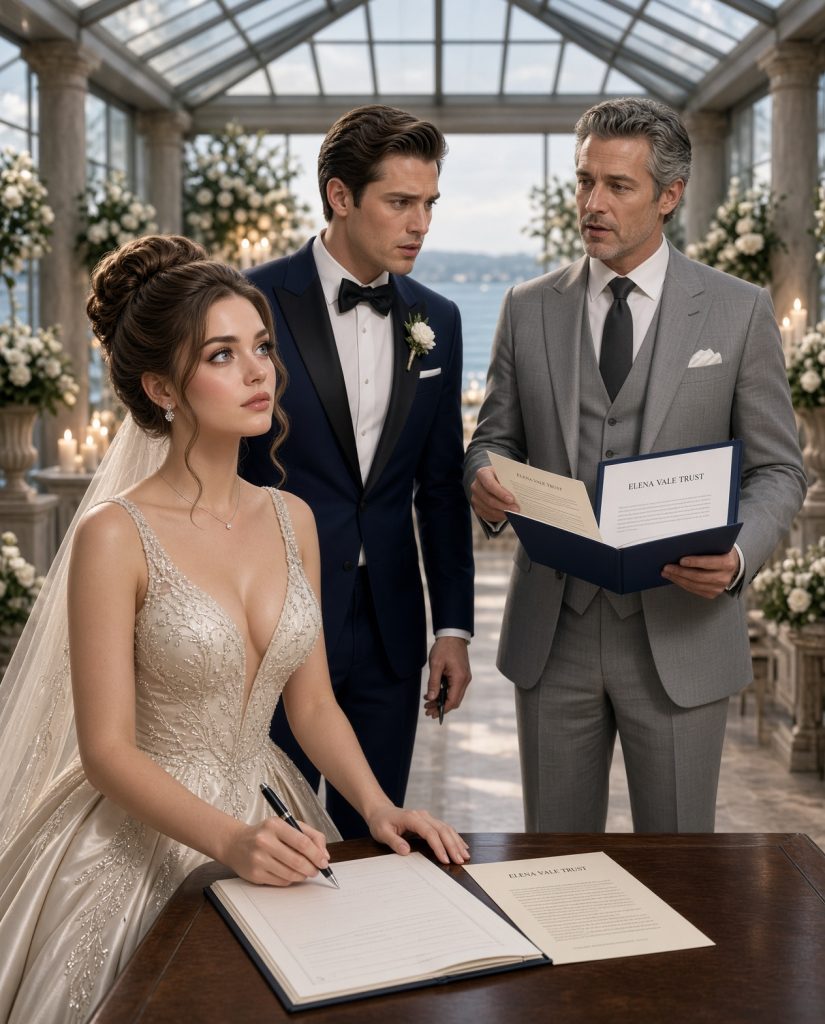
Adrian helped me understand the trust. My mother had owned forty-two percent of South Harbor Holdings through family shares inherited from her father. Rocco had managed those shares while I was a minor, but he had never owned them. Elena's trust transferred voting control to me upon marriage because, Adrian explained, she believed that would be the moment I was most likely to be surrounded by people claiming my choices for their own purposes.
My mother had predicted the room perfectly.
I decided not to use her gift as a weapon against either man.
Instead, I spent three weeks with independent accountants, maritime counsel, and the operations team at South Harbor. I learned what the terminals actually earned, what the Vale agreements were worth, and which contracts had been written to keep control concentrated in my father's office. Lucian offered experts. I hired my own.
When I was ready, I called a special shareholder meeting.
Rocco arrived furious. Lucian arrived only because I invited him, and he sat at the far end of the conference room without speaking. I proposed a five-year commercial access agreement between South Harbor Holdings and Lucian's freight company at independently appraised market rates. The contract included audit rights, conflict-of-interest review, and a clause preventing either spouse from unilaterally changing terms.
My father called it betrayal.
I called it business.
"You married him and now you are giving him what he wanted," Rocco snapped.
"No," I said. "I am leasing access to a customer at market price. He wanted control. He is not getting it. Neither are you."
Two independent directors sided with me. The agreement passed.
Lucian did not celebrate in the boardroom. He waited until we were alone in the elevator.
"You did not have to save my contracts."
"I did not save you. I protected an asset from a family feud."
That time he definitely smiled.
"Of course you did."
My father stopped speaking to me for nearly a month.
Lucian did not use the silence to pull me closer. He told me once that losing a parent while they were still alive was its own kind of grief, and then he left the subject alone.
That restraint opened the door more effectively than comfort would have.
One night in September, I finally asked why he had agreed to a marriage he claimed not to want.
He poured two glasses of water and sat across from me in the library where I had first overheard him.
"Because I was raised to believe attachment is a liability," he said. "My father made alliances. My mother paid for them. After she died, I decided I would never confuse duty with love. Then your father offered a solution that required neither."
"A wife you did not care about."
His face tightened.
"Yes."
He did not soften the answer. I appreciated that more than an excuse.
"And now?"
"Now I know I was arrogant enough to think not caring would make the arrangement clean. It only made me cruel before you had done anything to deserve it."
It was the first apology he gave me without trying to purchase forgiveness afterward.
I did not forgive him that night.
I did, however, stop pretending his honesty meant nothing.
In October, the email from Florence arrived. My deferred place in the conservation program was still available, but I had to begin the winter term in person. I read the message three times before telling Lucian.
He was silent for so long that the old fear returned. I expected conditions. Security. A shorter stay. A request that I choose marriage over the life I had wanted before him.
Instead, he opened the desk drawer and handed me my passport.
My father had kept it in the Vale family safe after our engagement. Adrian had recovered it with the rest of my personal papers.
"Your apartment deposit is still valid," Lucian said. "Adrian confirmed it."
I stared at him.
"You checked?"
"I asked him to check. I did not pay it."
Of course he understood the difference now.
"You want me to go."
"I want you to decide without wondering what happens to me if you choose yourself."
That was the moment I understood his heart had not changed because I had been patient enough, beautiful enough, or obedient enough to rescue him. It was changing because he had begun choosing a different behavior every time the old one would have been easier.
I left for Florence in January. Lucian did not turn distance into a loyalty test. Once a week he sent an ordinary message about the estate; I sent photographs from workshops and museums. Three months into the term, I invited him to visit.
In Florence, away from both families, we had our first real date after our wedding. At a tiny restaurant where no one knew his name, he reached across the table and stopped before touching my hand. I turned my palm over and closed the distance myself.
That was our beginning.
By summer, I returned to Chicago because I wanted to, not because the marriage demanded it. My west suite was exactly as I had left it. The only addition was a worktable in the adjoining study, built to the measurements I had emailed to a local craftsman. Lucian had paid for the table only after sending me the invoice and asking whether I wanted it charged to me or given as a gift.
I laughed for five full minutes when I saw the message.
The man who once believed a wife could be assigned a wing and a duty had learned to ask before buying a desk.
Our families noticed the difference too. My father eventually requested a meeting, not because he had changed, but because the new South Harbor agreement was profitable and the board no longer tolerated his private wars. I agreed to see him at Adrian's office. Lucian offered to come. I told him no.
He said, "All right," and meant it.
Rocco apologized badly. He called the marriage arrangement necessary. He called my mother's trust inconvenient. He never quite managed to say that I had been wronged. I stopped waiting for a perfect sentence from a man who might never learn how to speak it.
I did not give him my proxy.
I did give myself permission to leave the meeting without hating him enough to keep living in reaction to him.
That evening, I found Lucian on the conservatory terrace where our wedding reception had been held. The summer air smelled like rain and roses. A year earlier, I had stood in that house believing marriage meant disappearing into someone else's strategy.