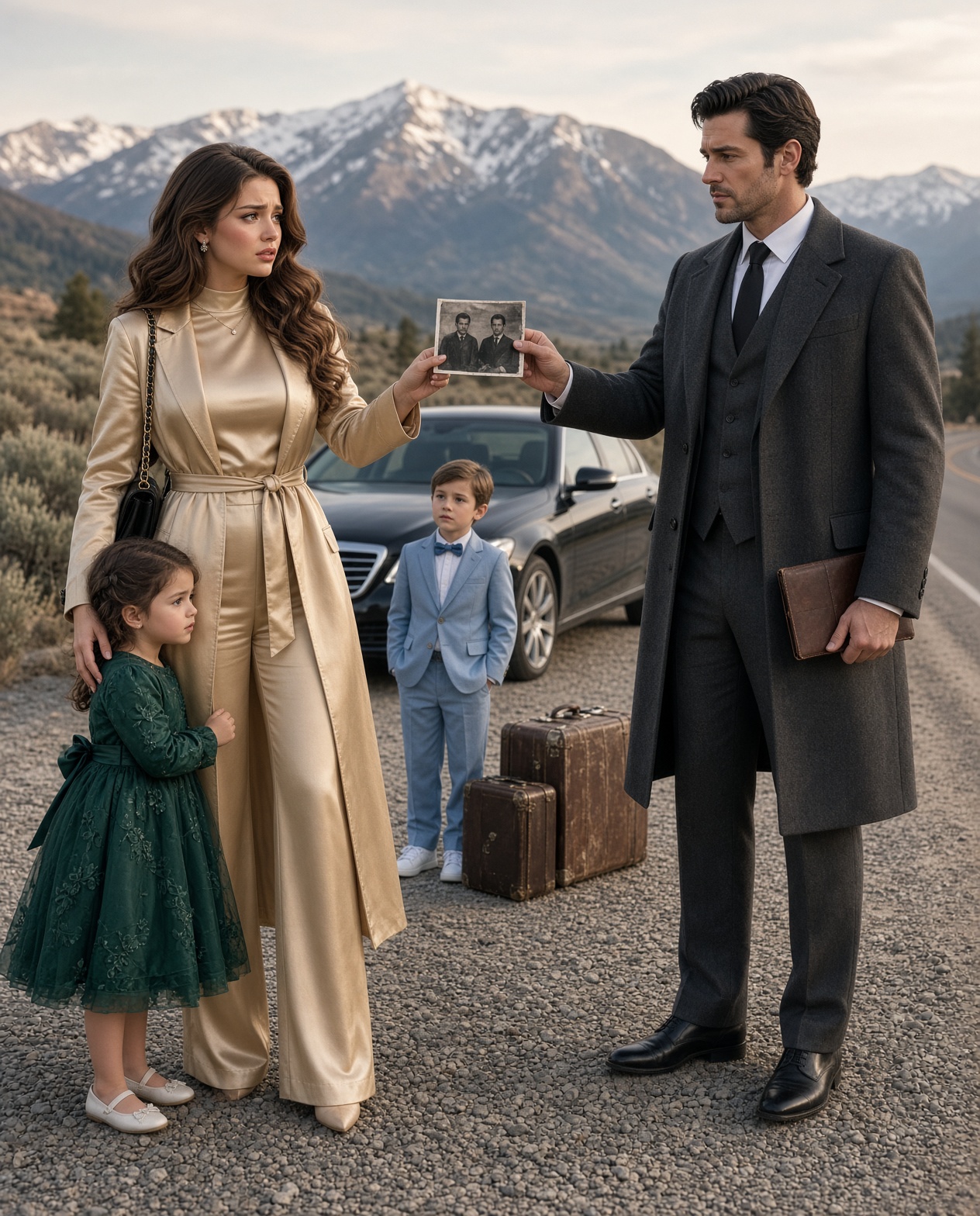
For half a second his face changed.
Not grief. Not confusion.
Calculation.
"Evelyn," he called. "What did you tell them?"
It was the wrong question.
I had spent hours wondering whether Theo might have misunderstood, whether there could be some impossible explanation, whether my marriage could survive the sentence my son had spoken in that clinic.
Adrian erased those doubts with six words.
What did you tell them?
I did not answer. The detective stepped between us and asked Adrian to leave the secure area. He refused until hospital security made it clear he had no choice.
The next morning, while Theo slept, I called an emergency meeting of the foundation's independent trustees. I did not make accusations I could not prove. I told them there was a criminal investigation involving Adrian, that Theo had been hospitalized, and that I believed foundation records might be relevant. The board's counsel immediately froze Adrian's signing authority and preserved the foundation's servers and financial records.
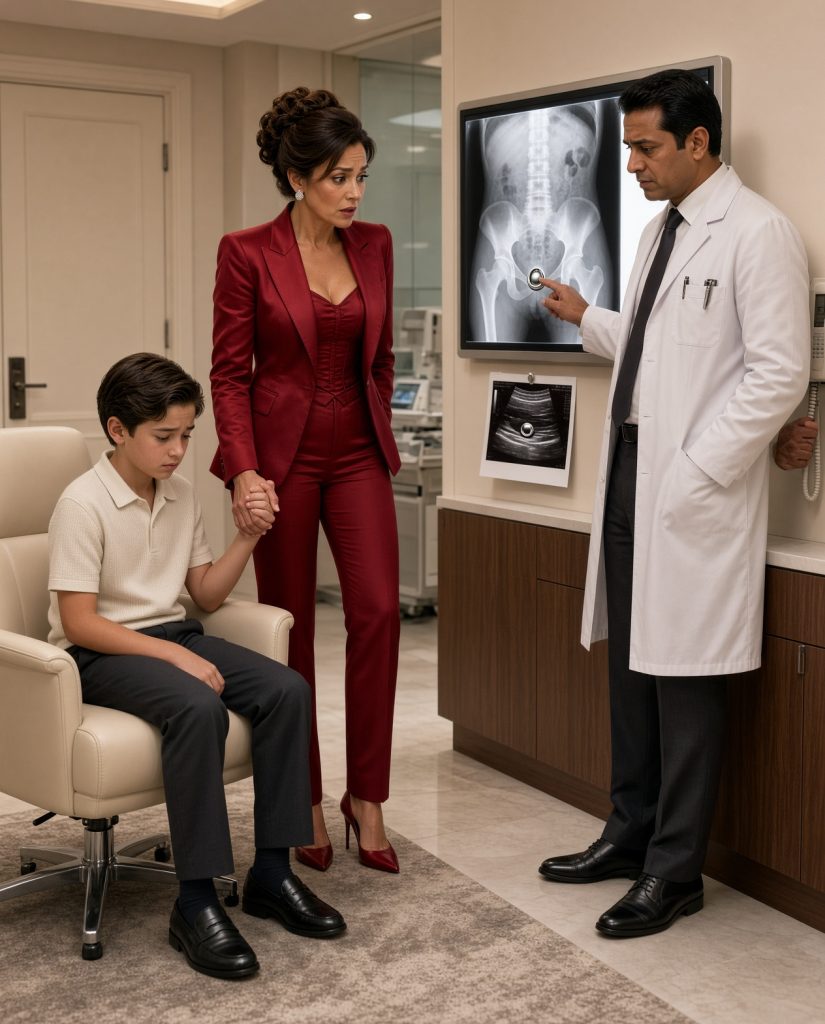
By the end of the week, investigators had obtained warrants for Adrian's study, office, devices, and several storage accounts. The titanium capsule contained a waterproof memory card and a tiny hardware encryption key. According to the later court filings, they held copies of ledgers, payment approvals, and private communications tied to shell vendors that had received millions from the foundation's expansion fund.
The most damaging files were not the financial spreadsheets. They were Adrian's own messages.
In one, sent to an associate the night Theo swallowed the capsule, Adrian wrote that the auditors were "too close" and that he needed the backup "off-site and invisible" for forty-eight hours. In another, sent two days later, he complained that the "temporary hiding place" had not resolved itself.
He never used Theo's name.
He did not have to.
The physical dimensions of the capsule, its serial marking, and the timing of the messages matched what surgeons had removed from our son's body.
Adrian was charged first in connection with what he had done to Theo and with obstructing the investigation. Financial charges followed after the forensic audit. His lawyers disputed the interpretation of the messages and argued that some business transactions were legitimate. Those questions took months to work through, and I learned quickly that evidence does not turn into closure on the same day it is discovered.
The foundation suffered too. Donors paused commitments. Two projects were delayed while every major contract Adrian had approved was reviewed. Newspapers camped outside our gate. People who had smiled beside us at galas stopped calling. Others called too much.
I moved Theo out of the family house before he came home from the hospital.
We stayed in a smaller residence owned by my sister on the opposite side of the city. It still had more rooms than we needed, but there was no locked study at the end of the hall and no portrait of an Armitage ancestor watching us eat breakfast.
Theo's recovery was uneven. Physically, he improved faster than I expected. Emotionally, he began having nightmares whenever thunder rolled over the city. He hid food in his desk drawer for several weeks. He asked me more than once whether telling the truth would make the foundation collapse.
That question hurt almost as much as the clinic did.
I told him the foundation was made of choices, not buildings, and that adults were responsible for repairing the damage adults caused.
He did not need to carry it.
Six months later, the board completed its internal review. Funds connected to the suspicious vendors were traced, litigation began to recover what could be recovered, and the trustees adopted controls Adrian had spent years resisting: independent vendor review, dual approvals, and direct reporting from internal audit to a committee he no longer controlled.
I remained on the board, but I stepped away from fundraising events for a while. I had spent too many years believing our family's public image was something fragile that had to be protected from embarrassment. Theo taught me the opposite.
Reputation is not protected by silence.
Only wrongdoing is.
The first Saturday he asked for pancakes again, we were still living at my sister's place. He stood at the kitchen counter in mismatched socks, arguing that chocolate chips were "basically breakfast vitamins." I laughed so suddenly I scared both of us.
Then he laughed too.
It was not the same laugh as before. I don't think either of us was the same.
But the sound filled the room.
For months I had replayed the moment Dr. Shah turned that image toward me and asked the question Adrian had tried to prevent anyone from asking. I used to think the worst moment of my life was seeing that metal shape inside my child.
It wasn't.
The worst moment was understanding that Theo had been carrying a secret because he thought protecting me mattered more than protecting himself.
The best thing I could do afterward was make sure he never had to make that choice again.